UXP Plugin Support Comes to After Effects: Public Beta Now Open
UXP plugin development is now available in After Effects (Beta) 27.1, so you can build with a modern JavaScript engine and Spectrum UI components today and shape the platform before CEP is phased out.
UXP (Unified Extensibility Platform) is now available for plugin development in After Effects (Beta). This is a significant step in modernizing the extensibility framework for our third-party developer community. If you build After Effects plugins, the public beta is the time to try it, report what is missing, and plan your next steps. You can download the beta version of After Effects and other Creative Cloud Apps directly from the Beta apps section of Creative Cloud Desktop.
What you need to do
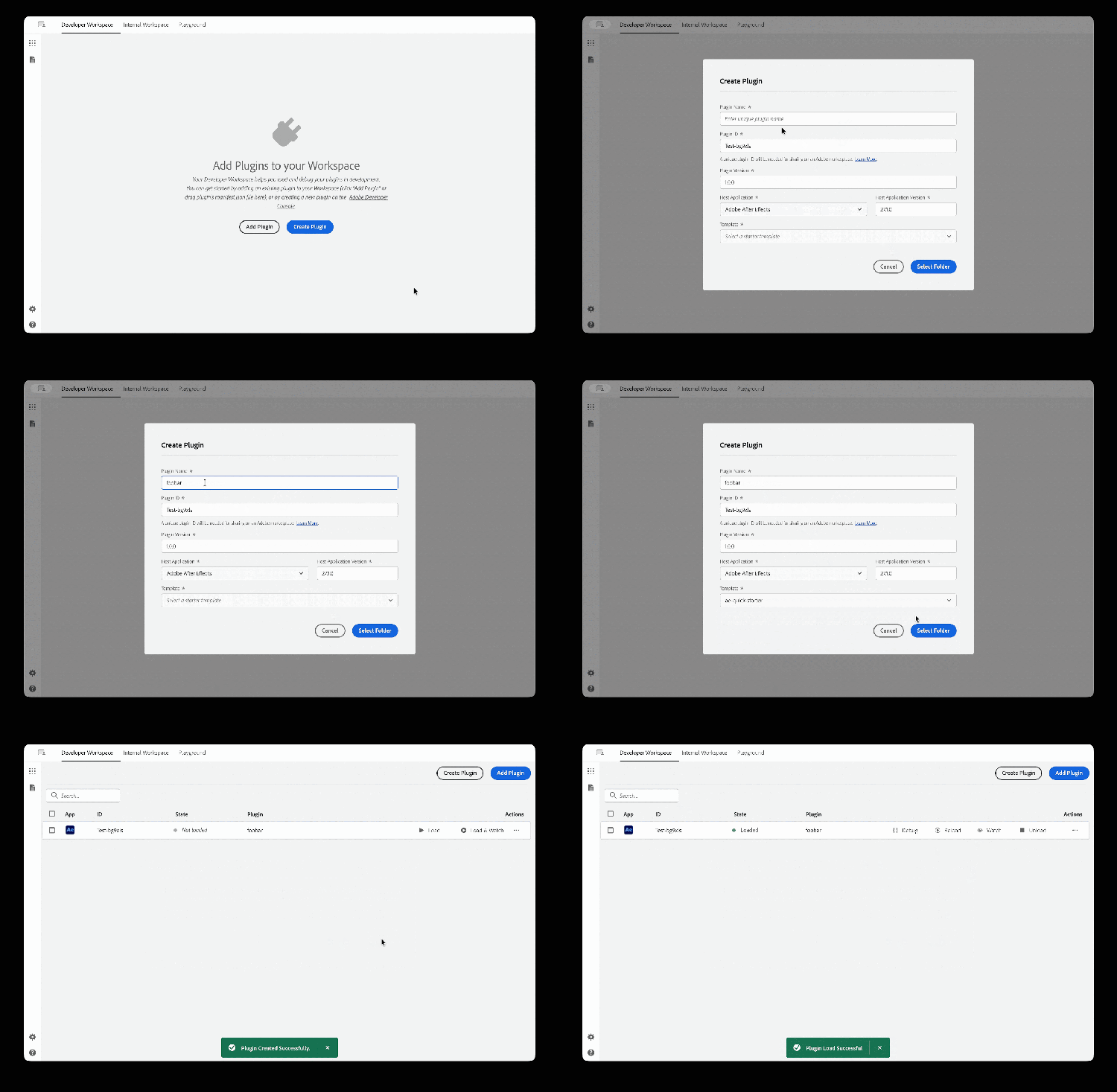
Build your first UXP plugin for After Effects in a few minutes with the quick starter template:
- Open After Effects (Beta) 27.1 (build 27.1.0.045). The beta must be running before you load a plugin.
- Download UXP Developer Tool (UDT) v2.4build from Creative Cloud Desktop.
- In UDT, click Create Plugin, choose After Effects as the host application, and select the quick starter template (
ae-quick-starter). - Click Load to load the plugin into After Effects (Beta). From then on, your edits reload automatically when you save.
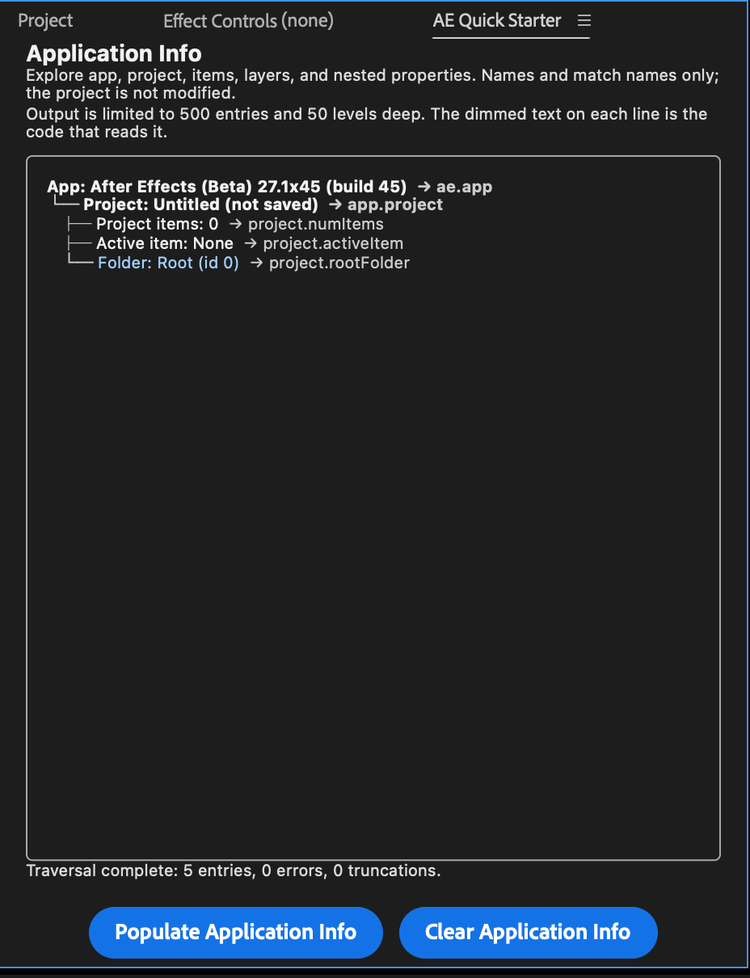
Once the starter is running, click Populate Application Info. It lists the items, layers, and properties in your open project, which makes it a hands-on guide to accessing the After Effects DOM and moving through its object tree. Similar quick starter templates are available for other UXP-enabled apps.
We plan to update the quick starter plugin over the coming weeks. Whether you are new to plugin development or have been building for years, tell us on the forum how we can make it easier to read and build on.
Why UXP
UXP is powered by a modern JavaScript engine and lets you use Spectrum UI components, so you get a more streamlined workflow for building powerful and efficient plugins for After Effects. The officially supported version in After Effects (Beta) 27.1 is UXP 9.4.
Read the documentation
Start with the After Effects development documentation to learn how to develop UXP plugins for After Effects. General UXP documentation is available on the UXP hub. Throughout the beta, we will keep updating the After Effects documentation with more examples and code samples.
Moving from CEP
Read the CEP to UXP migration timeline for key dates and migration support. The dates that matter for After Effects:
- December 2028: CEP is disabled by default in After Effects. Users can turn it back on.
- December 2028: Adobe Exchange stops accepting new CEP submissions for After Effects.
- December 2029: CEP removal from After Effects begins.
FAQ
Will my CEP plugins stop working?
Not yet. CEP will be disabled by default in After Effects in December 2028, and users can still turn it back on at that point. CEP will be removed from new After Effects versions starting December 2029.
Do I need to migrate right now?
No, but the public beta is a good time to give us feedback. Every flagship app gets a guaranteed minimum of two years from its UXP public beta before CEP is removed from new versions of that app, so you have time to plan. Testing now lets you report bugs, identify missing APIs, and tell us what works and what does not, well before CEP is phased out.
Which platform should I use to build new plugins: UXP or CEP?
We recommend UXP for new plugins. It provides a lighter, more efficient runtime than CEP and a modern JavaScript workflow. This is a beta version, so some features may be missing or incomplete. If your plugin depends on something that is not yet available, let us know on the forum, and keep that API in mind as you build.
Can I ship a UXP plugin to customers?
Yes, to After Effects (Beta) users. You can publish your plugins to Adobe Exchange, where other After Effects (Beta) users can access them. See Package & Distribute on the developer site for details.
How long will CEP plugins in Adobe Exchange continue to accept updates and new plugins?
Adobe Exchange will stop accepting new CEP submissions for After Effects in December 2028. Exchange will still accept updates to existing CEP plugins after that date.
What about hybrid plugins?
Hybrid plugins extend UXP with native C++ code. This enables performance-intensive processing, the reuse of existing C++ libraries, and the integration of native tools and services. They are not yet supported in After Effects, but they will be our next priority. Tell us what you would build with them and which workflows you need them to support.
What happens to my ExtendScript scripts?
It depends on the use case. CEP is being phased out, so you will need to rewrite CEP plugins to move them to UXP. Standalone ExtendScript scripts, including those that use ScriptUI, are expected to keep working in After Effects as they do today.
Join the community
Connect with other UXP developers, ask questions, and share what you have built:
- Ask questions and share knowledge in the Creative Cloud Developer Forums.
- Subscribe to the Creative Cloud Developer Newsletter.
- Join our Adobe Developers Live events.
We are committed to supporting you through this transition and look forward to seeing what you build with UXP. Your feedback helps us refine the platform, so please share it on the forum.