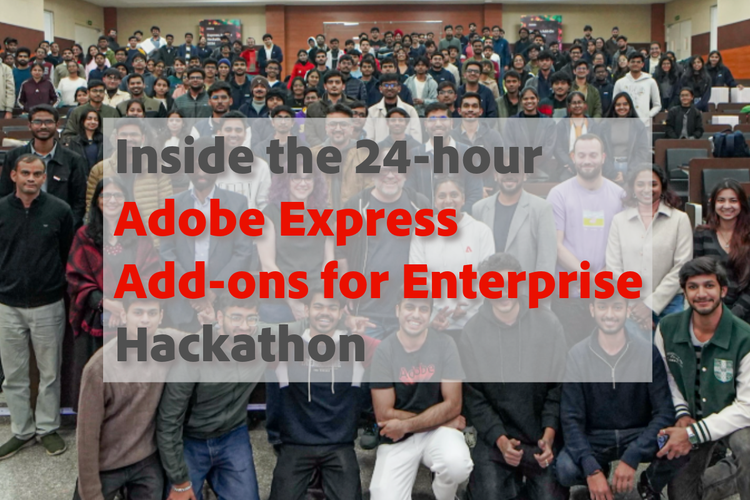
Inside the 24-hour Adobe Express Add-ons for Enterprise Hackathon
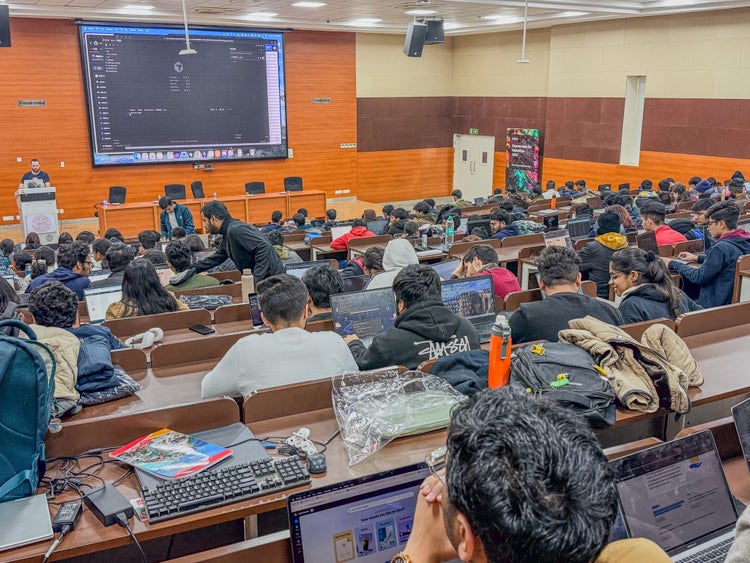
In January 2026, Adobe partnered with Netaji Subhas University of Technology (NSUT) in Delhi to host the Adobe Express Add-ons for Enterprise Hackathon.
Over a focused 24-hour event, student teams moved beyond experimentation with add-ons. They identified real user problems, scoped creative solutions, worked through challenges, and built working prototypes. This hackathon gave us a fascinating look at how the next generation of developers from India thinks about workflows and extensibility, and how they approach problem-solving with real tools and constraints.
This post provides an overview and reflection of what stood out during the event. We also highly recommend exploring the winning projects linked below.
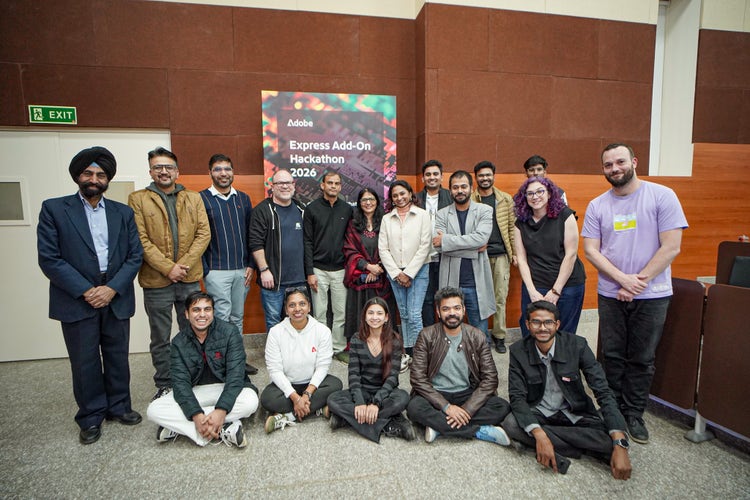
The Adobe teams, the NSUT team, and two community developers all supported the hackathon onsite.
Hackathons are worth paying attention to
Student hackathons are often framed as recruiting opportunities or learning exercises, where the perceived value lies in the enthusiasm or potential. The NSUT hackathon felt like more.
From the beginning, we were impressed with the user-focused thinking. Teams consistently started with real-world problems that an Adobe Express user might face. They considered who the add-on was for, how it created value, and where it fit into an existing workflow. That type of thinking is one of the most challenging aspects of building software (especially with time limits).
AI tooling played an important role, but the best projects didn’t treat it as the solution. Instead, it served as “project infrastructure” that helped teams move faster and more effectively, so they could focus their attention on the project’s context and usability. The newly-released Adobe Express Developer MCP Server was an important force amplifier for many teams.
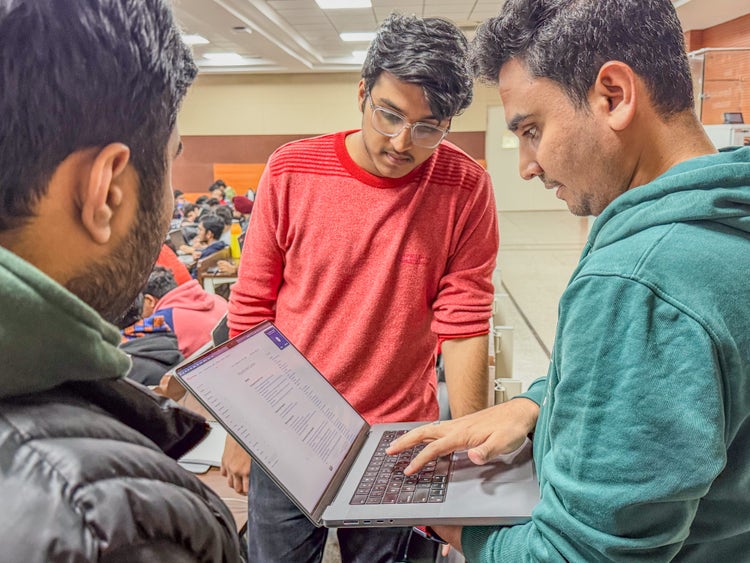
Kalyan Dechiraju (right), engineering manager for Adobe Express and the new Developer MCP server providing feedback to hackathon participants and gaining an understanding of where people struggle, what questions they have, and how Adobe can improve the tooling.
As you can see from the project gallery, the results speak for themselves. The projects built during the hackathon feel grounded in how Adobe Express users at brands and businesses actually create content.
An intense 24 hours of hacking
The hackathon lasted 24 hours, and it was clear that students didn’t approach it as a casual event. In India, the path from university to tech career is competitive and fast-moving. Students approached this hackathon with that reality in mind. Rather than building “something cool” for their portfolio, the teams used the event to show how they could think, collaborate, and turn ambiguity into practical digital tools for real users.
More than 500 students registered; 200 were selected to participate across 60 teams. We held two workshops ahead of the main event with strong participation. Most teams arrived having already explored Adobe Express, the add-on platform, and done some early investigation around their ideas. Those with their environments already set up saved themselves onboarding time and jumped straight into building.
The pace stayed high throughout the entire event. Teams created and adjusted scopes, asked sharp questions, and made pragmatic tradeoffs. Students engaged deeply with the Adobe mentors who came to support the event, and many followed up afterward to ask how they could have improved their projects or continue development.
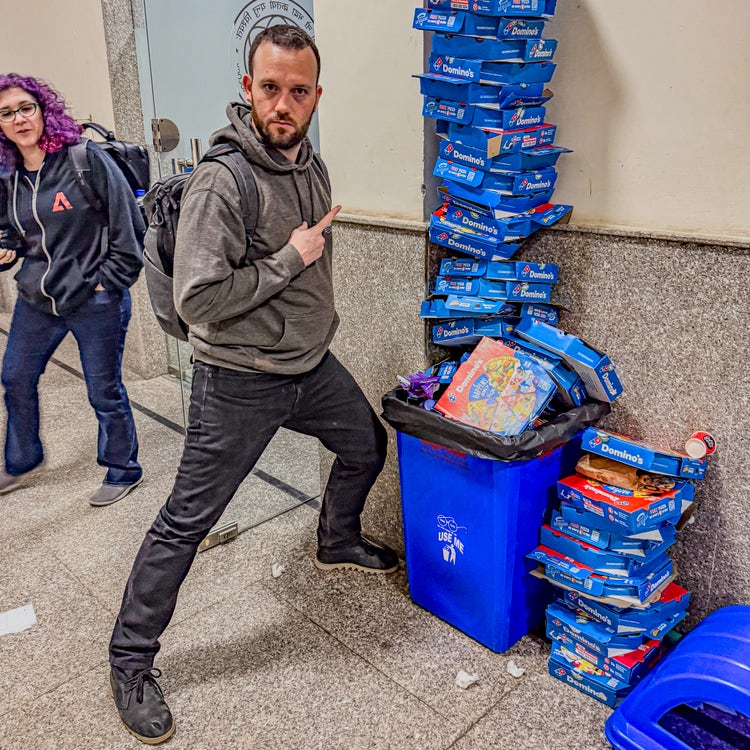
The Adobe Developer Community Team (pictured: Erin Finnegan, left, and Taylor Krusen, right) — together with Adobe’s Talent Acquisition — helped keep the hackathon participants energized as the night progressed.
Add-ons built for real users doing real work
We didn’t know what to expect when we tasked students with building Adobe Express add-ons for enterprise use cases, but the students had great ideas!
A clear pattern emerged across the projects: the most valuable add-ons targeted Adobe Express users creating content on behalf of something else, such as a brand, company, or team.
Many ideas focused on helping users reduce friction or move faster while staying on-brand. We saw ideas for adapting content across platforms, localizing designs, maintaining consistency, making sense of messy inputs, and much more. These aren’t imaginary problems. They are real issues that real users encounter once content creation moves beyond a single person.
Here’s a remix of the problem statements and solutions from the project gallery's submission videos:
A couple of observations stood out:
- The projects were focused. Teams really put themselves in the shoes of Adobe Express users and zoomed in on specific points of friction where workflows can break down.
- Many of the ideas met users where they already are. A lot of creative work happens in messages, notes, or chats long before someone designs anything. Making it easier to move from those conversations to Adobe Express was a powerful way to capture value.
If you haven’t already, explore the project gallery, watch the demo videos, and get inspired!
Hackathons as a growth catalyst
Most hackathons aren’t about shipping finished products. They’re about growth, learning, and surfacing ideas that excite developers. For successful events, those ideas can continue to inspire and grow after the hackathon ends.
At NSUT, several teams chose to keep building after the hackathon. Some refined their ideas and features. Others focused on improving usability and adding final polish. And in several cases, those efforts resulted in new add-ons being shipped to the Adobe Express add-on marketplace, including projects that didn’t win an award at the hackathon.
Team Pixel Pluck, for example, already launched two add-ons to the marketplace, Pixel Pluck and PhotoLabs. Read more about their hackathon experience in this post, written by one of their team members.
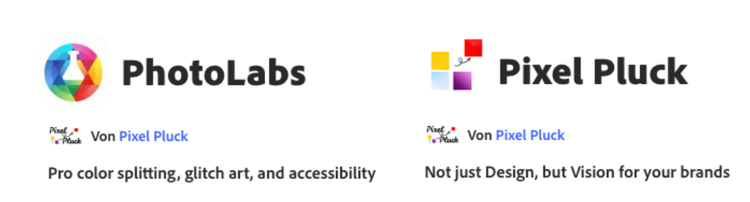
That’s an important outcome! Student developers at NSUT were able to take their idea from a short weekend sprint and meaningfully extend it into a production add-on. It demonstrates that this was a special group of builders, but it also shows that ideas closer to real-world use cases have a better chance to mature and grow after the event.
Even for projects that didn’t ship, the momentum carried their team forward. Students celebrated their work and participation publicly, talking about what they built and the problem they identified. It was clear they treated the experience as an example of building inside a real ecosystem.
Strong teams build good things
Many of the strongest projects came from teams made up of students from different years, departments, and areas of study. They each brought diverse strengths and expertise, from technical skill to design to video production. Groups that created space for everyone to contribute were able to realize the value of their combined perspectives. These students wouldn’t normally get opportunities to work together in a classroom, but they found common ground quickly once they had a shared problem to solve.
Faculty and leadership engagement amplified the experience. Professors helped judge projects and asked thoughtful questions. The dean and the director of the Computer Science program spoke to the event’s importance and the opportunities it created for students to build together.
A very special moment came when a winning team of four first-year female students from different programs — Team Think Post — was recognized on stage. Their win suprised a lot of people: Judges and attendees hadn’t expected a group this early in their studies to produce such a polished, user-focused add-on. The team later said they wouldn’t have been able to join the event without AI tools like the MPC server. It was an inspirational example of what’s possible when students collaborate and are given both the tools and the confidence to build early.
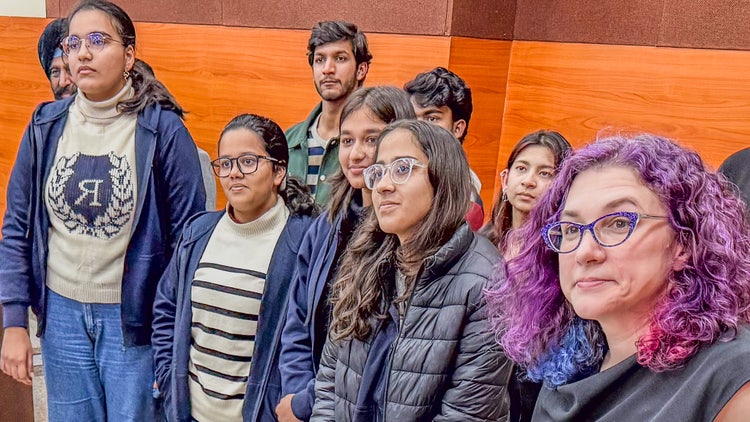
Adobe’s Erin Finnegan (right) with Team Think Post during the closing ceremony of the hackathon
The winning projects
The winners combined a clear focus on Adobe Express user needs with great project pitches. Below is a short overview of each. Follow the links to the project submissions to watch their demo videos and read deeper explanations of the add-ons they built.
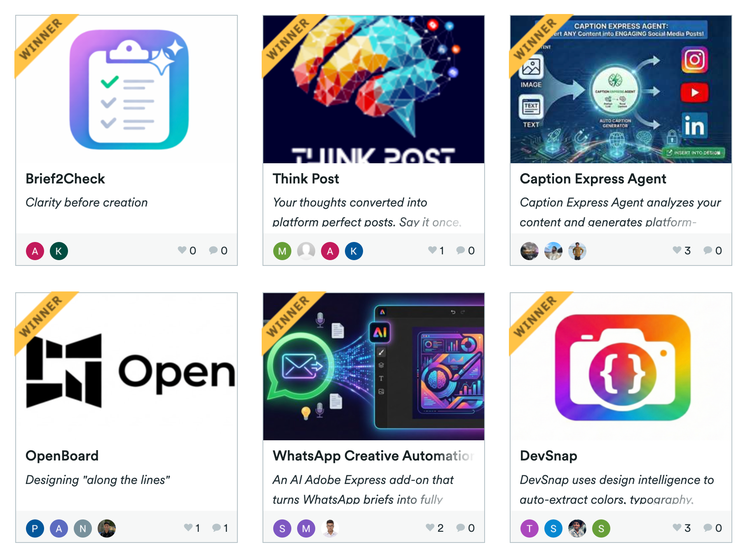
🏆 WhatsApp Creative Automation
Turn design briefs from WhatsApp conversations into fully-editable Adobe Express designs (view project on DevPost).
- Prize category: Most Valuable for Indian Business Users
- Team size: 3
🏆 Caption Express Agent
Analyze Adobe Express content and generate platform-optimized social captions (view project on DevPost).
- Winning category: Connected Workflows
- Team size: 3
🏆 Brief2Check
Convert dense conversations and design briefs into actionable task lists (view project on DevPost).
- Winning category: Presentation and Docs
- Team size: 2
🏆 DevSnap
Design UI elements in Adobe Express and export them as ready-to-use code snippets (view project on DevPost).
- Winning category: Most Valuable for Developers
- Team size: 4
🏆 Think Post
Turn user input into editable, platform-specific designs (view project on DevPost).
- Winning category: Enterprise Efficiency
- Team size: 4
🏆 OpenBoard
Turn doodles and sketches into production-ready design assets (view project on DevPost).
- Winning category: Design Intelligence and Automation
- Team size: 4
Why hackathons with local developer communities matter
Strategically, this hackathon mattered because it provided a direct window into how the next generation of AI-enabled builders engage with Adobe Express as a platform, not just as a product. It also revealed how, and for what purposes, they used AI tools in their process.
India has a large and growing developer community that already plays an important role in the Adobe Express ecosystem. That's true of both external add-on builders and internal engineers building the Adobe Express platform. One of the things that stood out the most about NSUT students at the hackathon was their mindset and approach to building. From their user-focused thinking to intelligence and collaboration, this was a group of developers ready to build useful add-ons that solve real problems.
Events like the NSUT hackathon are one of the most powerful ways for us to listen and engage. They teach us how emerging developers interpret and interact with the platform. We can see how they navigate it, which problems they treat as most urgent, and where the ecosystem can evolve next. They also show us what’s possible when motivated builders have access to real tools, clear constraints, and the opportunity to collaborate.
What other developers can learn from this hackathon
This hackathon demonstrated what makes a good add-on. The students’ work highlights a few repeatable practices:
- Build a diverse team with different backgrounds and experiences. Or at least carry out some beta testing with diverse, cross-disciplinary participants.
- Solve a real problem. Focus on the real value your add-on will deliver for your target audience.
- Use the tools that help you move fast. Build your add-on with your favorite tools including the Adobe Express Developer MCP Server.
- Tell your story clearly and early. The students had only three minutes to pitch their add-on to the judges. That video needed to be interesting enough for the judges to spend more time with the additional documents. Explaining the value of your add-on, how it works, and who it is for is almost as important as the add-on itself. If people don’t use your add-on because they are unaware of it or don’t understand its value, all your hard work will have been for nothing.
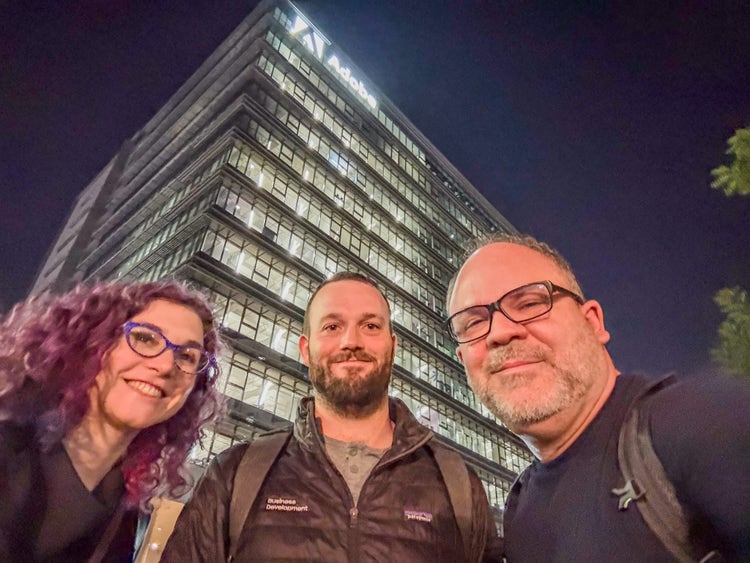
The Adobe Developer Community Team in India (from left to right): Erin Finnegan, Taylor Krusen, and Ingo Eichel
Ready to explore more?
- Browse the full hackathon project gallery on DevPost (and be sure to watch the videos!).
- Discover new add-ons in the Adobe Express Add-on Marketplace, including Pixel Pluck and PhotoLabs
- Read about Pixel Pluck’s hackathon story.
- Check out some posts about the hackathon on LinkedIn (see comments).
- Explore the developer resources for building an add-on.
Acknowledgments
Thank you for participating and judging the hackathon. And of course, thank you for supporting the student teams:
- Adobe Talent Acquisition Team, India: Harpreet Kaur, Ajit Jha, Shirin Shakir, Samarth Arya
- Adobe Express Engineering: Kalyan Dechiraju, Vamshi C..
- Adobe Developer Experience (DevEx) Team: Nimitha Jalal (Developer Resources), Akshay Abrol (Review and Approval), Yash Jugran (DevOps)
Thank you to our community developers Fardeen Mansoori and Gyana Ranjan Mohanta. Thank you, Rudresh Dwivedi and Pinaki Chakraborty from NSUT, for organizing and judging. And thank you, Sushama Nagpal and Dr. M. P. S. Bhatia, for supporting and speaking at the event. Thank you to our team of volunteers and to everyone I missed in this list.
And of course, thank you to the Adobe Developer Community Team: Erin Finnegan, Taylor Krusen, and Ingo Eichel.